
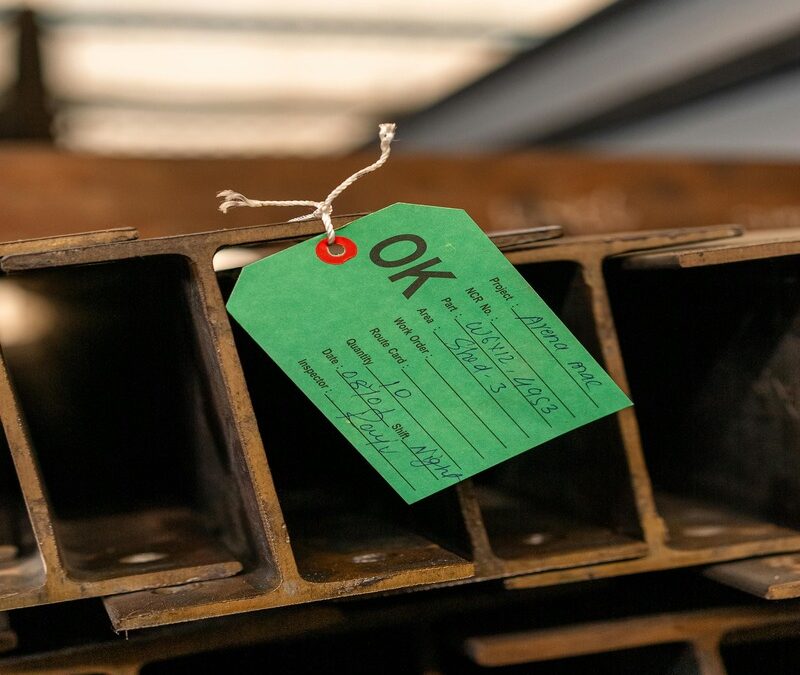
There’s a saying in maintenance: if it’s not documented, it didn’t happen.
Most people nod when they hear it. Fewer truly understand what it means—until something goes wrong.
Let me share a real example.
One day, a flotation circuit experienced a pH runaway. Not a small drift—this escalated into an environmental breach. As you would expect, the temperature in the room rose quickly.
Operations management was not amused. In fact, they were very direct in questioning the professionalism of the entire maintenance team.
At this point, things could have gone in two directions: opinions… or facts.
The maintenance manager chose facts.
He started with the basics:
- Are the preventive maintenance tasks (PMs) for the flotation pH sensors in place? → Yes
- Have they been executed? → Let’s verify
He opened the work orders.
And this is where things got interesting.
These were not “tick-the-box” PMs. The documentation was to the point:
- Timestamp of execution
- Name of the technician
- pH reading before calibration
- pH reading after calibration
- Calibration standard batch number
In other words: not just done, but proven done, and done properly. And not just with words, but also with pictures. Evidence was undisputable.
Operations, however, had another angle.
They questioned the DCS pH readings and explained they had been using a handheld laboratory pH meter to validate—and eventually control—the circuit.
Fair enough. Cross-checking is good practice.
So the maintenance manager asked a simple question:
“Can you show the calibration records for that handheld sensor?”
Silence.
No documentation.
No calibration traceability.
No records of accuracy.
What followed was a textbook chain of events:
An unverified handheld sensor → incorrect pH reading → excessive CaO dosing → pH runaway → environmental breach.
After a few rounds of rather “energetic” emails, the conclusion became clear.
Maintenance had done exactly what was required—and had the documentation to prove it.
Operations had acted on a measurement that had no traceable basis.
This is the moment where documentation proves its real value.
Not when everything is running smoothly, but when you are standing in front of a room where people are looking for answers—and possibly someone to blame.
Documentation turns:
- “We think we did it” into
- “Here is exactly what was done, when, how, and with what reference”
And here’s the part that often gets overlooked:
🔹 Documentation is not only defensive — it is a performance tool
A well-documented shutdown is one of the most powerful improvement tools you have.
When shutdowns are properly documented—not just “completed”, but broken down into:
- Actual vs planned durations
- Critical path deviations
- Resource utilization
- Bottlenecks and waiting times
- Real delay reasons
- Technical findings during execution
—you create a dataset that allows you to systematically improve.
Next shutdown, you don’t guess:
- You know where time was lost
- You know which tasks overran
- You know where sequencing failed
- You know what can be pre-fabricated or eliminated
And that is where real gains come from:
➡ Shorter shutdowns
➡ Higher availability
➡ Lower cost per tonne
Without documentation, every shutdown is a new experiment.
With documentation, every shutdown is an iteration.
The lesson is simple:
Good maintenance keeps the plant running.
Great maintenance keeps records that can survive scrutiny—and improve the next shutdown.
And in the end, the only thing that speaks louder than opinions is well-documented evidence.